
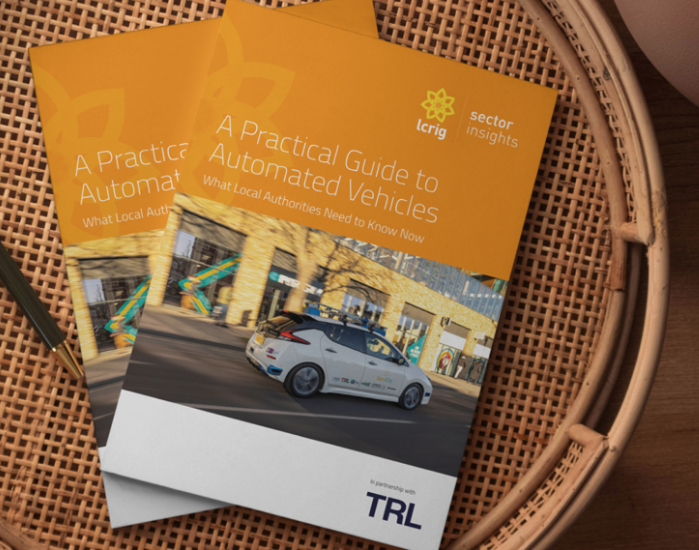
LCRIG has published its latest Mini-Guide, in collaboration with TRL, exploring how automated vehicle (AV) technology is evolving beyond trial phases and entering early deployment.
As this transition gathers pace, the role of local authorities is becoming increasingly important. Attention is shifting towards how these technologies can be safely and effectively integrated into everyday road networks.
This practical jargon-free guide sets out what this means for local authorities, not only how they respond, but how they can actively shape how AVs are introduced and managed.
Inside the guide you will find:
- An introduction to Automated Vehicles
- Why AV’s matter for local authorities and what they need to be aware of
- Key barriers and challenges, including practical considerations and limitations
- What success looks like – from safety, and reliability to accessibility, affordability and practical delivery
- Critical factors to support informed decision-making and operational readiness
- The steps needed to move from isolated trials to safe, scalable adoption
James Long, Strategic Initiatives Director at TRL, said:
“Local Authorities don’t need to worry about the intrinsic safety performance of AVs that might be operating on their network. Where they can really add value to an automated passenger service (APS) permit consent request is by assessing the suitability of an AV service for the physical characteristics of the local area, and the needs of the people who might use it.
“With a little forethought, local authorities can start making changes now to remain in the driving seat when it comes to supporting local deployment.”
(Picture: LCRIG)