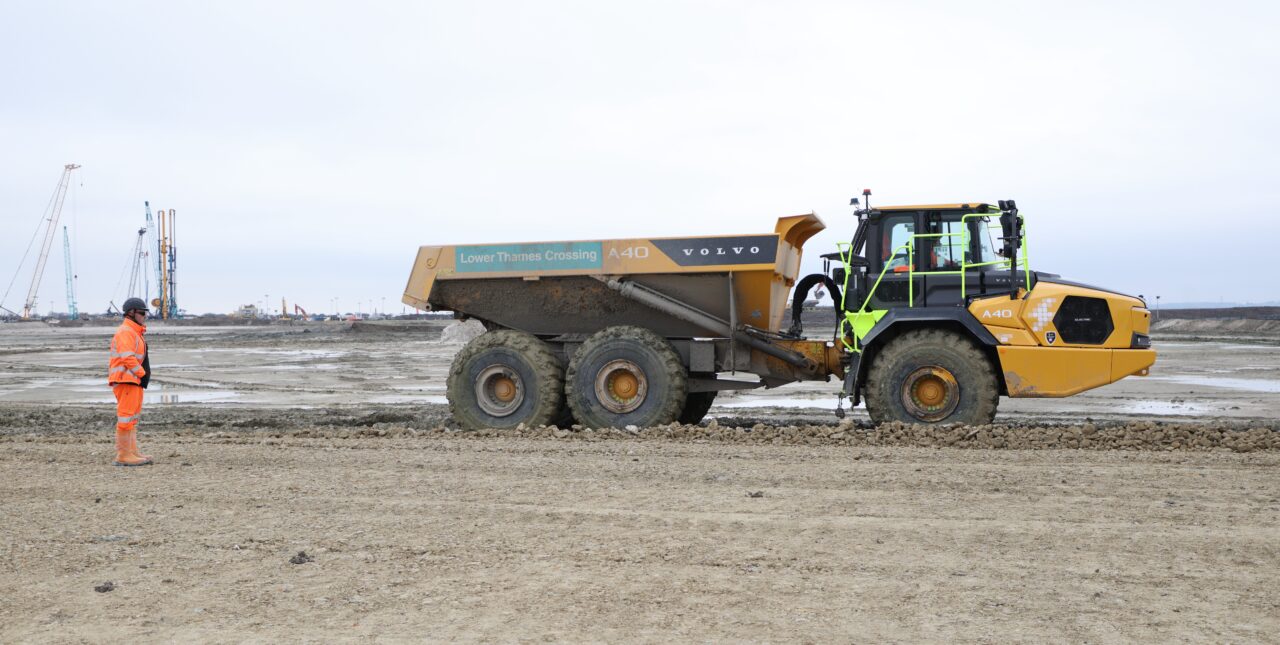
The world’s largest electric articulated dump trucks in production have started their first job on the Lower Thames Crossing project.
The four Volvo A40 Electric articulated haulers are the first battery-powered machines in their size class to start work on site anywhere in the world.
Each can carry up to 39 tonnes of construction materials such as gravel, sand or stone, in a single load, doing the same heavy-duty work as their diesel-powered counterparts but with zero exhaust emissions, less noise, and lower running costs.

The giant machines are being put to work building the foundations and structures for the new road and tunnel entrance for the Lower Thames Crossing near East Tilbury in Essex.
The trucks are charged using electricity generated on site from British-produced green hydrogen.
Over the lifetime of the vehicles, the electric machines are predicted to be cheaper than diesel and HVO alternatives.
Shaun Pidcock, Lower Thames Crossing Programme Director, said:
“Going electric no longer means compromising on size, power or productivity. These remarkable machines show that even the heaviest jobs can be done cleanly, and in a way that is better for those working on or living near our sites.
“By using the next generation of construction machinery to make the Lower Thames Crossing Britain’s greenest road today, we are helping the industry set a new standard for tomorrow and make diesel-powered sites a thing of the past.”
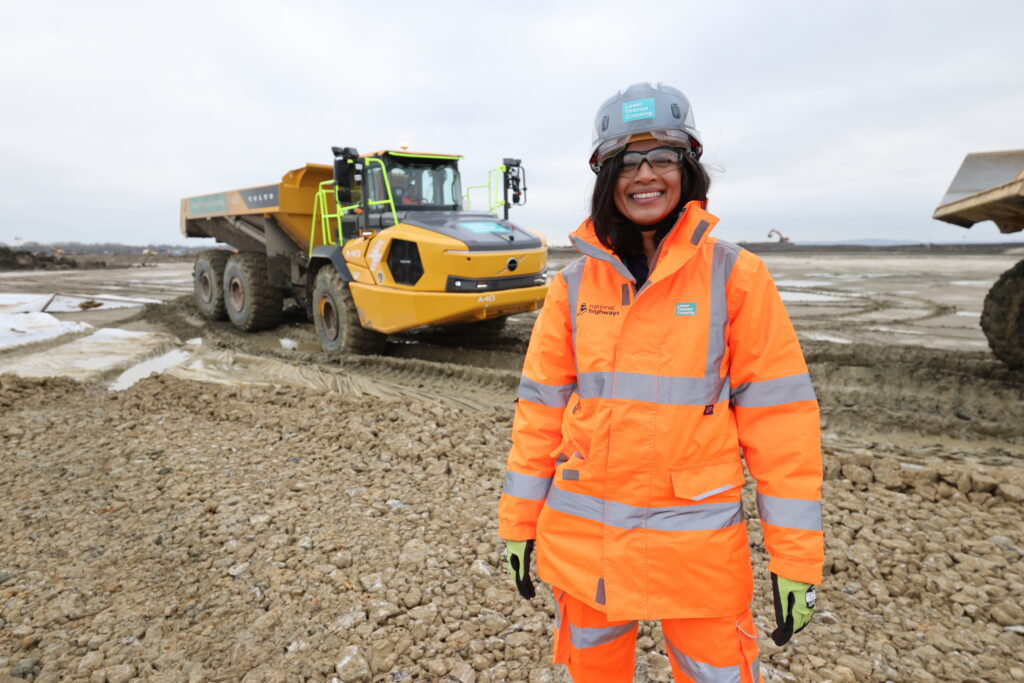
The A40 Electric haulers are being used by BMJV, a joint venture between Bouygues Travaux Publics and Murphy, the Delivery Partner for the Tunnels and Approaches section of the Lower Thames Crossing.
They were supplied and will be supported by SMT GB, Volvo Construction Equipment’s dealer in the UK.
Darren Fitch, Head of Strategic Accounts and Electromobility Sales Europe at Volvo CE, said:
“When a project of this profile chooses electric, the whole industry takes notice. The Lower Thames Crossing has set some of the most ambitious carbon goals in British construction, and our A40 Electric haulers are helping deliver them. Every load they move shows that electric works at scale, with lower running costs, zero exhaust emissions and a far better environment for operators and neighbours.”
(Pictures: National Highways)