The Department for Transport has outlined its next steps for local highways maintenance, including further analysis of council spending, updated ratings and stronger requirements for incentive funding.
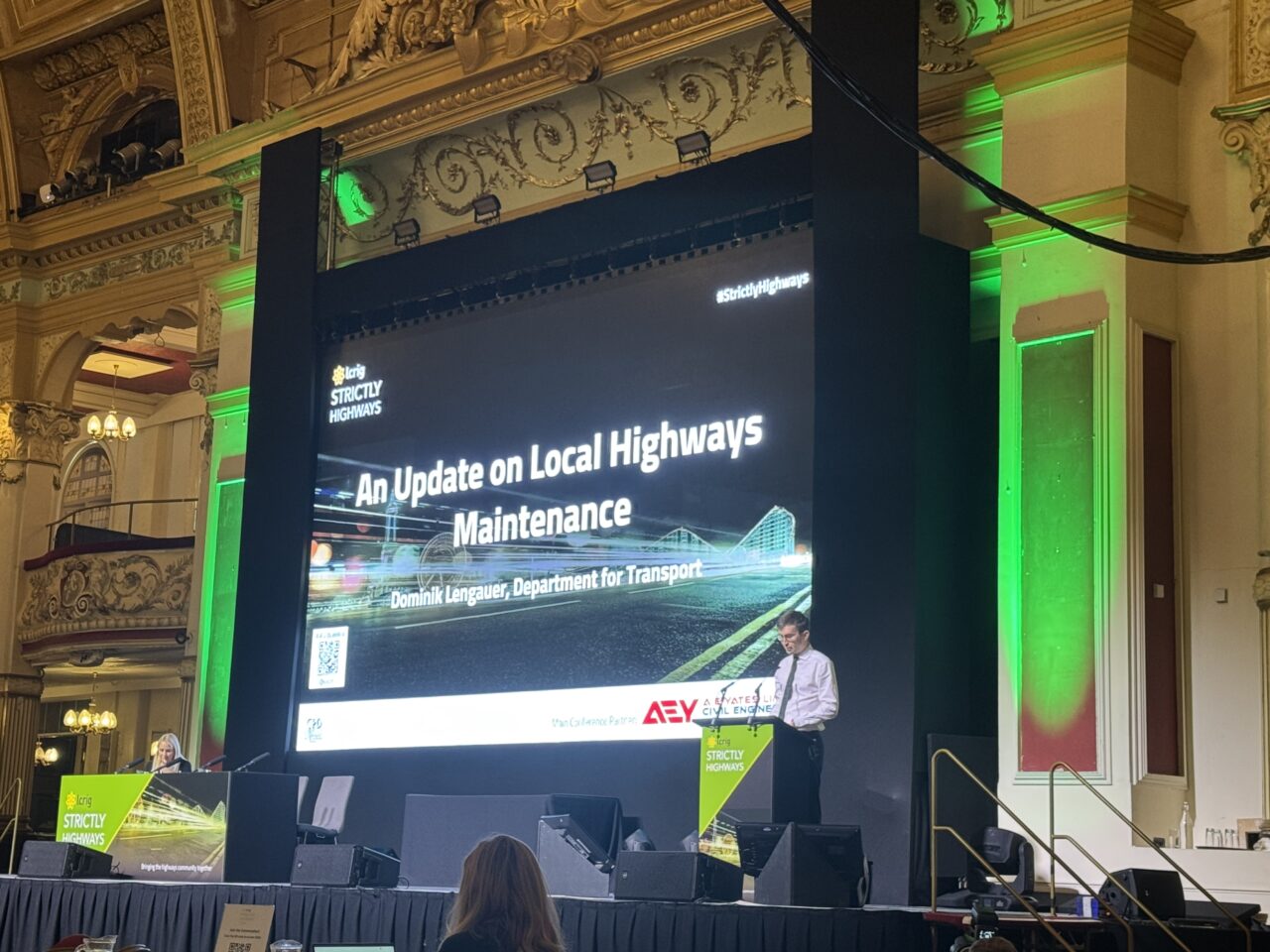
Speaking at LCRIG’s Strictly Highways 2026, DfT Head of Local Highways Dominik Lengauer said the department’s approach focused on funding, transparency and accountability, and practical support to help authorities improve the condition and resilience of their networks.
He told delegates that early findings from the latest transparency reports showed authorities were planning to spend £800 million more in capital this year than two years ago. DfT is still analysing the returns and will share further findings in the coming months.
“The scale of this increased investment is hugely welcome,” he said.
Mr Lengauer highlighted the Government’s £7.3 billion commitment for local highway authorities between 2026/27 and 2029/30 to maintain and improve local roads.
He also outlined the role of the new Structures Fund, designed to support repairs or replacements that authorities could not otherwise afford through their maintenance budgets.
The fund was developed with input from local highway authorities, with ADEPT and the National Bridges Group helping to ensure it reflected the sector’s needs. Successful schemes are due to be announced in the coming months.
Alongside funding, Mr Lengauer said transparency reports were intended to help residents understand how money is spent and provide a consistent framework for authorities to compare approaches, share good practice and learn from one another.
Updated guidance published in June seeks more detailed information on spending and maintenance activity, as well as assets beyond the carriageway, including drainage, structures and footways.
DfT is preparing its next set of local highways ratings, with a data review process giving authorities an opportunity to check information from their transparency reports before it is used.
Mr Lengauer said that, as reporting develops, there are opportunities for the ratings to reflect a broader range of factors, including asset management maturity, drainage, skills and training.
Requirements for highways maintenance incentive funding have also been strengthened. In addition to publishing transparency reports, this year’s requirements include up-to-date asset management plans, training and professional development.
He said the department had heard consistently from the sector that successful maintenance programmes depended on effective asset management, supported by the right skills and capability.
DfT will confirm whether authorities have qualified for incentive funding this year, with payments to be made later in Q3 and Q4.
Practical support includes extending Live Labs 2 into this year so lessons can continue to be shared, alongside peer reviews delivered by the Local Government Association.
The department has also been working with sector partners to update the Well-managed Highway Infrastructure code of practice, with the revised version expected to be published shortly.
Its annual winter survey will launch shortly. Authorities will also be asked to provide regular updates on their road salt supplies to help improve understanding of network resilience and winter preparedness.
Closing his presentation, Mr Lengauer stressed the importance of collaboration in turning funding and support into improvements on local roads.
“Government can provide funding, transparency, and support, but we cannot improve local roads alone,” he said.
“Real progress depends on partnership, but most of all on the expertise and the dedication of the people in this room.”
(Picture – LCRIG)