Grid Smarter Cities founder Neil Herron has co-authored new research with Durham University examining how digital technology could make urban freight deliveries more efficient by dynamically managing bookable kerbside loading bays.
The paper, Real-Time Optimisation for Rescheduling Bookable Kerbside Delivery Bays under Vehicle Delays, was written by Nihal Berktas, Riccardo Mogre, Li Ding and Mr Herron, combining academic expertise from Durham University with operational experience gained through live deployments of digital kerbside management technology.
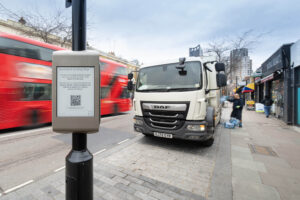
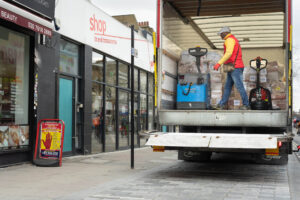
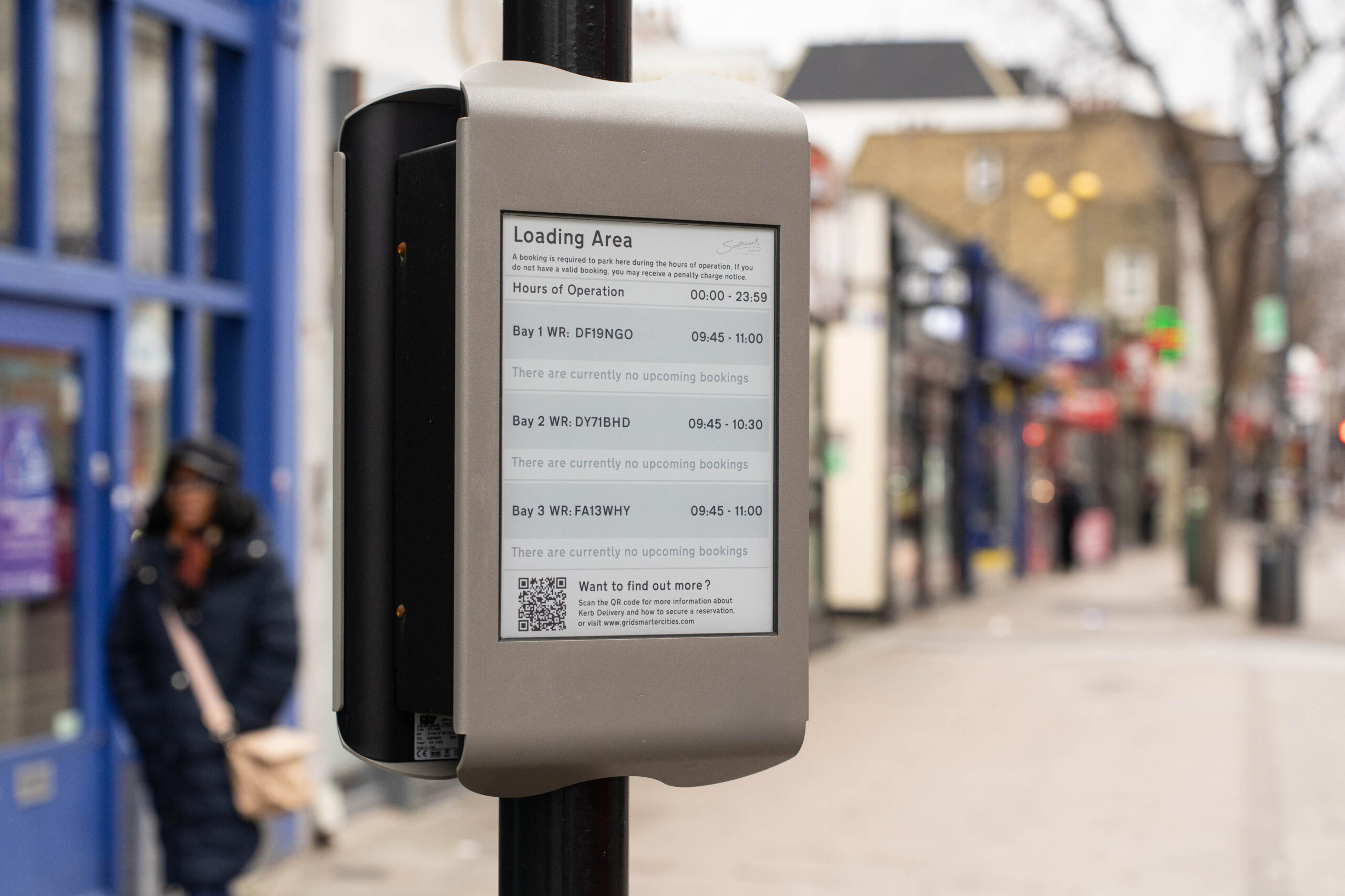
The research uses operational data from Grid Smarter Cities’ bookable loading bay scheme on Walworth Road in partnership with Southwark Council. It explores how optimisation and decision-support systems can automatically reschedule bookings and reallocate kerbside space when delivery vehicles arrive later than expected, reducing disruption for operators and local authorities.
Mr Herron said the work reflects the growing need to treat the kerbside as dynamic digital infrastructure rather than static road space: “For decades, the kerbside has been managed as a static piece of infrastructure,” he explained. “Yet the demands being placed on it are becoming increasingly dynamic. This research helps demonstrate how digital systems can support more responsive, efficient and intelligent management of limited kerbside space.”
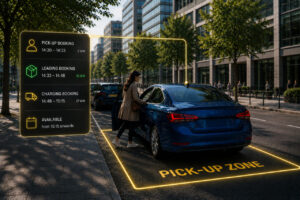
Beyond today’s freight operations, the authors argue that the findings have significant implications for connected and autonomous mobility. The paper suggests future fleets of autonomous delivery vehicles and robotaxis will require machine-readable kerbside permissions capable of allocating, modifying and communicating stopping rights in real time as conditions change.
The study also reinforces Mr Herron’s long-standing view that digital kerbside management will become a key element of future transport systems. As founder of Grid Smarter Cities, he has been a prominent advocate for digitally managed kerbside space and has contributed to Department for Transport work on kerbside management as well as helping develop commercial deployments of bookable loading bays in UK cities.
Using information gathered from the Southwark deployment, the authors evaluated thousands of operational scenarios and found that real-time optimisation can significantly reduce disruption compared with traditional approaches. It says this reduces congestion, improves air quality and prepares road networks for increasingly connected and automated transport.
Regarding the Southwark deployment, Councillor James McAsh, Leader of Southwark Council commented: “Southwark is proud to be leading the way with innovative approaches to how we use our streets… These bays are about making it easier for businesses to access parking when they need it, while ensuring we make the most efficient use of limited road space.
“By allowing delivery drivers to book a space in advance, we are reducing the need… to drive around searching for parking, cutting congestion and improving local air quality… Smarter management of kerbside space is essential… helping us balance the needs of residents and businesses while prioritising healthier, low-carbon travel.
“The Walworth Road bookable loading bays demonstrate how we can combine technology, environmental responsibility and practical solutions for residents and businesses.”
(Picture – Grid Smarter Cities)