New academic research is highlighting how uncertainty over finding legal loading space can contribute to stress among urban freight drivers, and has concluded that digital kerbside management has the potential to improve working conditions, traffic safety and the efficient use of limited road space.
The peer-reviewed Swedish study, presented at the City Logistics 2025 conference and published in Transportation Research Procedia, examined a pilot involving Grid Smarter Cities’ Virtual Loading Bay (VLB) technology around London’s Borough Market.
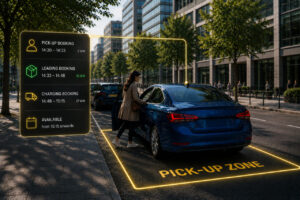
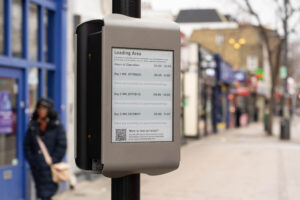
The system enables drivers to pre-book loading bays for up to 90 minutes, reducing the need to search for available kerbside space and cutting the amount miles travelled circling the area looking for somewhere to stop.

Researchers from Chalmers University of Technology and the University of Gothenburg monitored 17 delivery trips carried out by two freight operators between November and December 2024. Drivers and co-drivers wore body sensors that measured stress levels, heart rate and skin temperature, while also completing surveys before and after their delivery rounds. GPS data was then combined with the physiological measurements to identify where stress levels changed during each journey.
While the study did not identify a statistically significant reduction in overall stress levels following the introduction of the bookable loading bays, it did reveal clear evidence that searching for parking, uncertainty over kerbside access and operational time pressures are major contributors to driver stress. One monitored driver experienced elevated stress after spending 20 minutes searching unsuccessfully for a loading space before eventually parking in a restricted area and receiving a Penalty Charge Notice.
The researchers found average stress scores during delivery operations were consistently higher than drivers’ background resting levels, regardless of whether the booking system was in use. They also noted that stress is influenced by a wide range of factors beyond parking availability, including traffic conditions, freight volumes, road layout and seasonal demand.
Despite the limited sample size, the authors argue the pilot demonstrates the value of combining physiological monitoring with operational data to better understand the pressures faced by delivery crews. They suggest wider deployment of bookable loading bays – such as those managed by Grid Smarter Cities’ technology – across complete delivery routes, alongside broader interventions to improve kerbside access, could contribute to safer roads, more efficient freight operations and better wellbeing for drivers.
The study concludes that digital kerbside management should be considered not simply as a logistics tool but as part of a wider approach to reducing conflict over road space, improving traffic safety and supporting the people responsible for keeping urban freight moving.
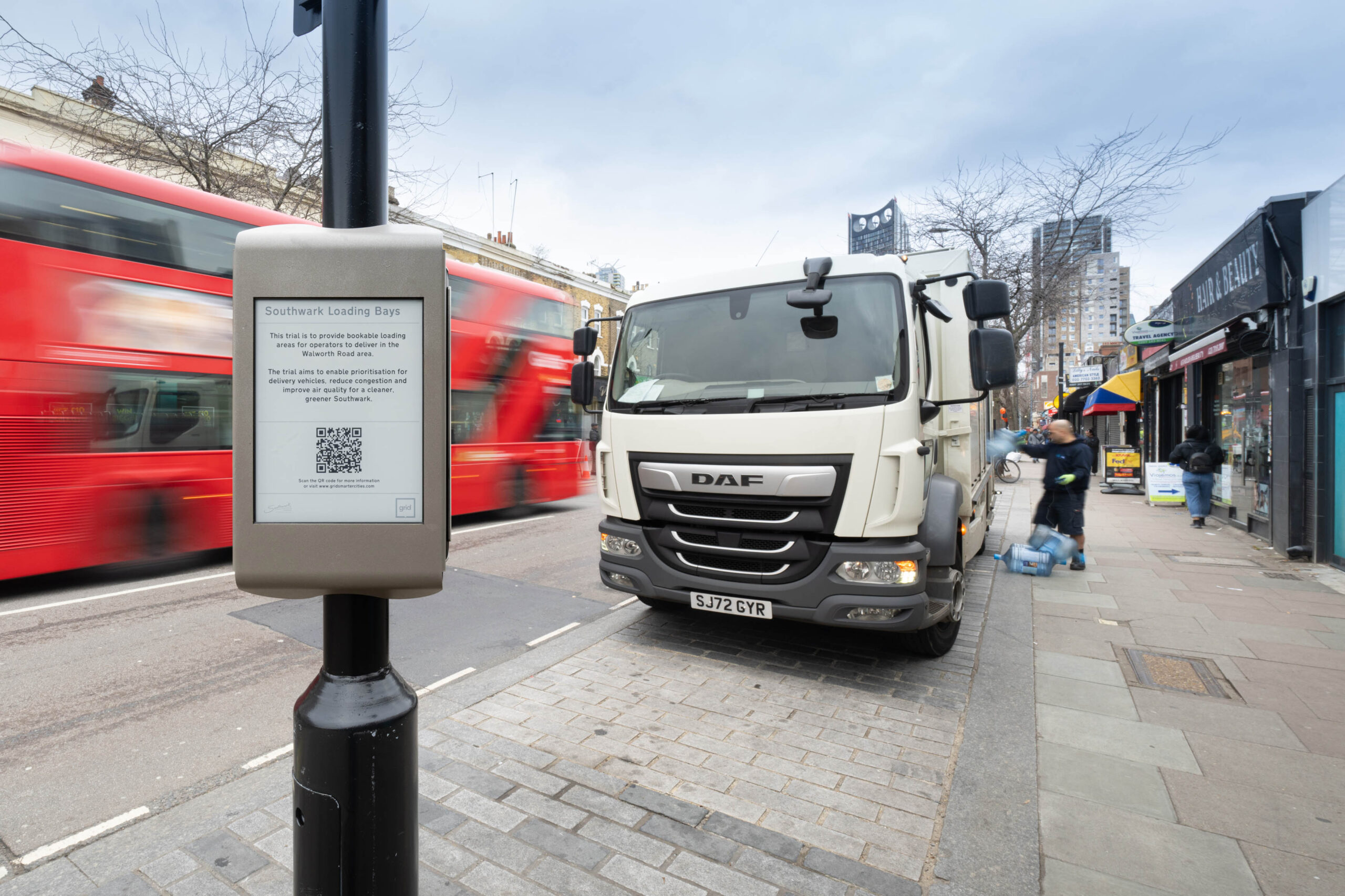
Grid Smarter Cities operates in other locations in the Borough, including the award-winning bookable bays on Walworth Road (pictured).
(Picture – Grid Smarter Cities)