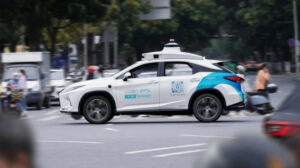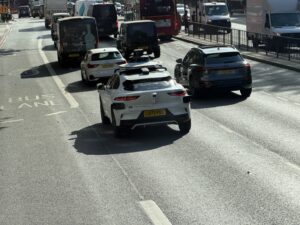
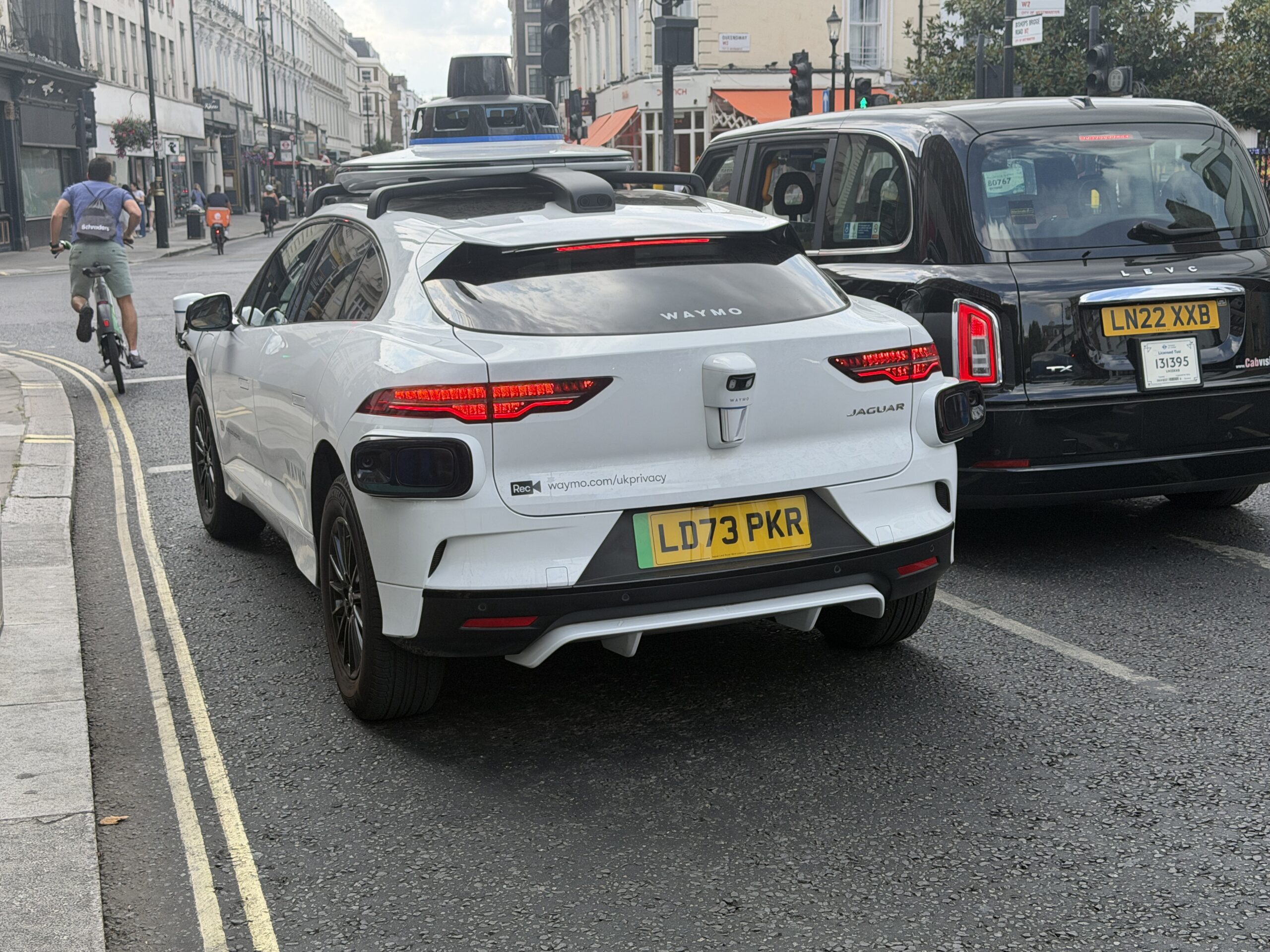
The Independent Workers’ Union of Great Britain (IWGB) has called for a halt to London’s driverless taxi rollout, following a London Assembly report raising concerns over safety, congestion and regulatory oversight.
The Assembly’s Transport Committee said it had not received sufficient evidence to support the introduction of autonomous passenger services in the capital.
The report comes as several operators prepare to introduce driverless services in London, including Waymo, Wayve and Baidu. Waymo has been testing vehicles in the capital and is seeking approval to launch a commercial fleet of several hundred cars this year.
Uber and Wayve have secured Transport for London (TfL) private hire licences for supervised self-driving services, in which a human driver remains legally responsible. Freenow and Baidu are also targeting a fully driverless launch in 2027.
The proposed expansion has raised concerns among London’s 105,000 licensed private hire drivers, whose livelihoods could be affected by the technology.
Gholomreza “Rez” Kamyabi, an Uber driver and vice-chair of the IWGB Private Hire Drivers Union, said drivers were already struggling financially and faced uncertainty over how they would support their families if autonomous vehicles replaced their work.
The committee has called for TfL to work with unions and operators on retraining, redeployment and financial support for drivers affected by the transition.
However, the IWGB is demanding that the rollout be stopped altogether.
Union president Alex Marshall warned that driverless vehicles could put thousands of jobs at risk while delivering benefits to technology companies and investors.
The report also highlights questions over who has the authority to regulate autonomous passenger services in London.
Under the Government’s interim Automated Passenger Services permitting scheme, the Driver and Vehicle Standards Agency (DVSA) issues operating permits, while TfL must give its consent before a service can launch in the capital.
However, TfL cannot independently suspend or revoke a permit once it has been issued. The authority also has no formal role in existing driverless trials, and operators are not legally required to report incidents to it, although some have shared information voluntarily.
Matthew Wright, GMB’s Regional Organiser, added:
“We look forward to working with TfL and the Transport Committee on the report’s recommendations to ensure London’s drivers have a voice and are not left behind.
“GMB is pleased to see the Transport Committee recognise the impact autonomous vehicles could have on drivers’ jobs and their recommendation for a just transition plan. Support and protection for drivers, including retraining and redeployment opportunities, will be essential if autonomous vehicles become more widely available.
“We also welcome the recommendations on passenger safety, and particularly the experience of disabled passengers, who often rely on our members for assistance and reassurance only a human driver can provide. We have been calling on the Department for Transport and TfL to develop a plan for a just transition to driverless services, and we urge them to begin work on this prior to deployment.”
(Picture: Olga Gonzalez)