Construction of the HS2 high-speed rail network has already caused some 200 million hours of traffic jams, according to Daily Telegraph analysis. The figure will continue to grow until the delayed, over-budget project is scheduled to be completed in the early 2040s.
Data from the Department for Transport (DfT) shows drivers have had to endure more than 160 associated roadworks on major A-roads and motorways alone.
Any contractor wanting to close or divert a section of England’s backbone of trunk roads must submit detailed plans to National Highways. The first mention of the project in one of these plans came in November 2017: for the best part of two days, the southbound lane of the A46 was due to be closed between Stoneleigh (venue for this week’s LCRIG Innovation and Learning Festival) and Kenilworth in Warwickshire.
Over the eight and a half years since, some 163 sets of roadworks have seen traffic cones deployed in HS2’s name. Telegraph analysis shows that, at the worst point, eight works were simultaneously ongoing in early February 2022, and again throughout March 2024.

All told, 14 stretches of carriageway – from the M25 in Buckinghamshire to the A500 in Staffordshire – have been affected to date; roads used by an average of 56,000 vehicles a day.
With such a high volume of motorists, in a country with 185 licence-holders for every mile of tarmac, the time lost behind the wheel to temporary speed limits and diversions quickly spirals. Every planned roadwork comes with an expectation of the delay it could cause: “slight” (under 10 minutes), “moderate” (between 10 and 30 minutes) or “severe” (more than 30 minutes).
Taking the lower estimate in each case, and assuming each vehicle has 1.5 occupants (the average, according to DfT data), HS2-tagged sites have likely caused the loss of roughly 200 million hours for drivers and their passengers.
And this, insists the Telegraph, is just from disruption to the strategic road network, England’s major highways. If comparable data for residential streets and country lanes were available, the total would likely be much higher.
There will be years of pain to come yet. HS2’s website claims to have “350 active construction sites” with work “at its peak”.
Conceived by Gordon Brown’s government in 2009, plans laid out the following March suggested Phase 1 would be up and running by the end of 2026. That deadline has been extended repeatedly in the intervening years. And last month, with the original completion date mere months away, it was pushed back to 2040.
Announcing the delay, Transport Secretary Heidi Alexander revealed HS2 would now likely cost more than Nasa’s Artemis mission to return astronauts to the Moon. She also confirmed the trains’ speed would be reduced from 223mph to 200mph – just 75mph faster than Avanti’s current “Pendolino” stock – in order to save money.
A DfT spokesman said:
“HS2 is primarily about adding vital seats to an overstretched rail network, and its wider benefits are ignored by this methodology.
“This analysis is simply not comparing like with like. Local road delays and intercity train journeys are completely different things and cannot be meaningfully compared in this way.”
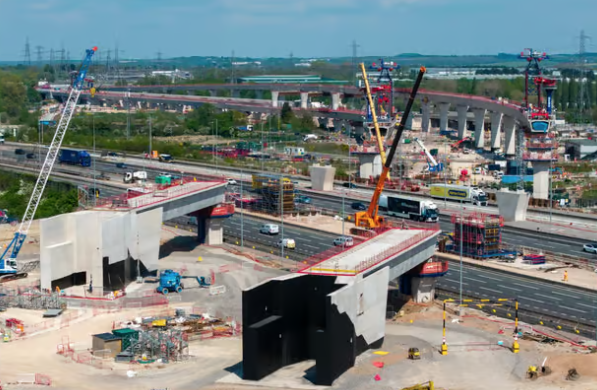
(Picture: HS2 Ltd)