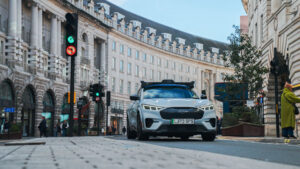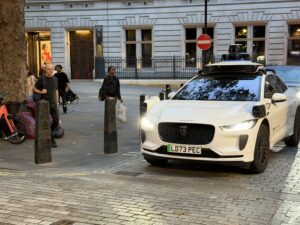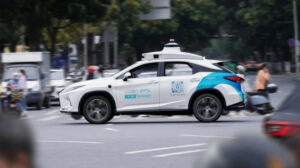
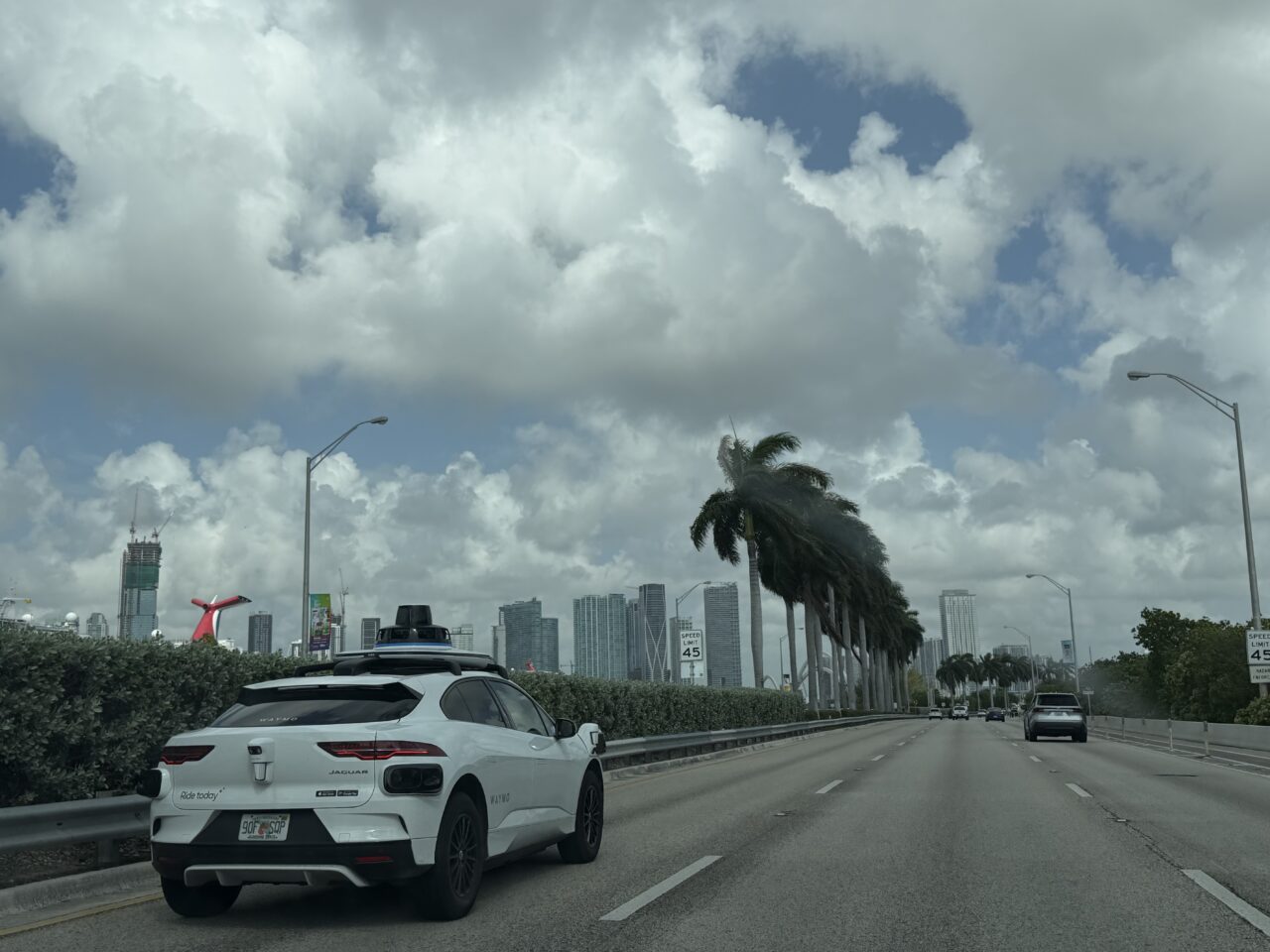
For a lot of people working in the highways industry, the progression of autonomous vehicles over the last 30 years has been part of their daily lives. From the well-publicised Demo 97 and Demo 98 in which production cars fitted with what was then considered cutting edge technology followed a course of magnets on an unfinished stretch of motorway, to today when a driverless taxi trundles past you without in even registering, things have come a long way and the progression is happily accepted. This is not necessarily the case with the ‘general public’.
Automotive tech website CarBuzz has come across a patent from Stellantis for an invention that looks to solve the problem, and it’s straight out of science fiction. How would you feel about a hologram being your chauffeur?
Automakers and tech companies are throwing buckets of cash at developing automated driving systems. These are SAE Level 4+ systems, where there is almost never a need for a person at the controls.

One of the issues with those systems is trust. Humans are used to knowing there is someone at the controls. It’s important not just for trust and confidence, but also for communication. This includes giving or receiving instructions from the passengers. In the patent, Stellantis posits that a hologram or projection could help solve both.
The system would monitor the occupants of the vehicle. It sees where each person is sitting and where they are looking. It would then use projectors inside the vehicle to create an image of a driver who would then talk to the passengers.
It would act like a head-up display, rather than a representation in the driver’s seat. You would see a reflection of the avatar in the windshield. It would have machine-learned expressions, would sync up mouth movement with machine-generated speech, and would even look at you when talking to you.
Stellantis describes an even more fascinating scenario that involves real humans and the holographic autonomous driver. It would come into play in the rare situations where a person has to take over the car. Autonomous vehicles will likely still have remote operators for some situations. When a vehicle drives outside the operational domain, or if there is some sort of particularly unusual issue on the road, for example.
Instead of a person simply taking over the car remotely, the car would bring them into the loop. The same projectors would show an image of the remote driver, making it look as though they were in the car with you. They could look at you and talk to you, all from their driving station somewhere else in the world.
The invention in this patent would let the remote driver acknowledge a problem, or at least an issue, to passengers. It would also help them reassure you that it’s under control.
(Picture: Olga Gonzalez)