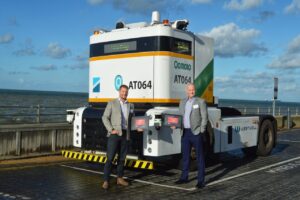

BMW Group has recorded one million driverless vehicle movements across four production plants, as it expands the use of automated driving technology to improve vehicle logistics and manufacturing efficiency.
The milestone follows the introduction of the company’s Automated Driving In-Plant (AFW) system at MINI Plant Oxford, which joins three existing installations at Dingolfing, Leipzig and Regensburg in Germany.
More than 53,000 automated movements were recorded at the Oxford facility over the past year. Across all four plants, BMW Group says around 3,500 vehicles are moved autonomously each day.

The AFW system allows newly manufactured vehicles to drive without a driver along designated routes between production and logistics areas. At Dingolfing, where the technology was first introduced in 2022, the initial application involved moving new BMW 7 Series models, including the all-electric i7, from the end of the assembly line to the dispatch area.
Since its introduction, the system has developed from a pilot project into a production-ready technology that can be adapted to different factory layouts, vehicle platforms and manufacturing processes.
It uses external sensors, cloud-based computing and motion-planning software to guide vehicles along predetermined routes. LiDAR sensors enable the system to detect and respond to people, other vehicles, transport equipment and temporary obstacles in its operating environment.
BMW Group plans to extend the technology to a fifth production site in 2027, with its Spartanburg plant in the United States expected to be next.
The expansion forms part of the company’s iFACTORY strategy, which aims to increase the use of digital technology, connectivity and automation across its global manufacturing operations.
(Picture: BMW Group)