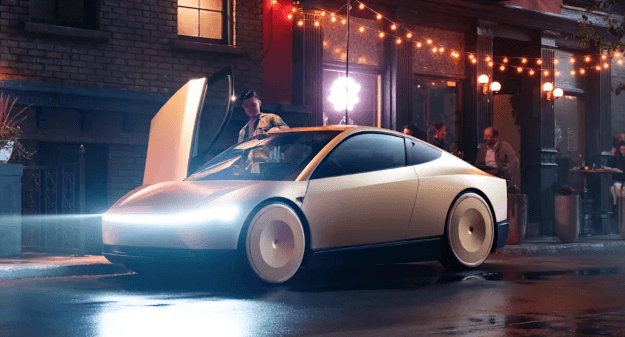
Italy has provisionally approved Tesla’s Assisted Driving System (TAD), bringing the technology into another major European market and raising further questions about the future regulation of advanced driver assistance systems in the UK.
The Italian Ministry of Infrastructure and Transport announced on Friday (20 November) that the country’s vehicle registration authority had recognised the provisional type approval previously issued by the Netherlands, following its own technical assessments.
The decision, which took effect on 19 November, makes Italy the 12th EU member state to recognise the system and the first of the bloc’s four most populous countries to do so, ahead of Germany, France and Spain.

TAD, previously marketed as Full Self-Driving (Supervised), uses software to assist with steering and speed control, including navigating urban traffic, negotiating junctions and roundabouts, and changing lanes.
However, despite its name, the technology does not make the vehicle fully autonomous. Drivers remain responsible for the vehicle at all times, must keep their hands on the steering wheel, maintain attention on the road and be ready to take control.
The Italian ministry confirmed that the approval is provisional and based on the procedure for innovative technologies under EU Regulation 2018/858.
The Netherlands’ vehicle approval authority, the RDW, initially assessed the system and issued the approval which other member states have subsequently recognised. The authority has also undertaken further testing of software updates, including assessments on test tracks and public roads.
In an update published on 16 November, the RDW confirmed that it had approved changes to TAD for Tesla vehicles fitted with hardware version 4.0 or higher. These include earlier driver warnings, additional measures to prevent misuse and changes to how the system communicates speed information.
The RDW said its testing had found no adverse or unintended effects on the system’s operation or the vehicle’s driving behaviour.
However, the authority also confirmed that the wider EU approval process remains ongoing, with the matter being considered by the European Technical Committee on Motor Vehicles.
UK implications
While Italy’s decision does not automatically authorise the system for use in Great Britain, the developments are relevant to the UK’s own approach to increasingly sophisticated vehicle technology.
Great Britain operates a separate vehicle type approval framework, administered by the Vehicle Certification Agency (VCA), although the Government has committed to maintaining alignment with EU and internationally developed vehicle standards.
In a consultation published in August 2026, the Department for Transport proposed updating the GB type approval scheme to incorporate UNECE Regulation 171, covering Driver Control Assistance Systems (DCAS).
These systems provide more advanced support with driving tasks but do not take full control away from the driver.
The proposed changes would require passenger and goods vehicles fitted with DCAS to comply with the regulation’s requirements on system safety, interaction with other safety systems and driver interaction.
Separately, the Government has confirmed that the Automated Vehicles Act 2024 provides the legislative framework for regulating automated vehicles in the UK, with further technical requirements and safety assurance arrangements still being developed.
The Italian decision therefore represents another development in the European adoption of advanced driver assistance technology, while the UK continues to consider how such systems should be assessed and regulated on domestic roads.
(Picture: Tesla)