Behavioural science expert Rory Sutherland has told Highways News that transport policy should concentrate on making alternatives to the car easier and more attractive rather than assuming motorists can simply be persuaded to stop driving.
Speaking in a forthcoming special Highways Voices podcast series with Mail on Sunday columnist Peter Hitchens, the Ogilvy UK vice-chairman and co-author of “Transport for Humans” argues that many journeys are made through habit rather than a conscious comparison of the available options. “One of the things I do believe about people’s travel habits is that it’s generally good to broaden people’s repertoire,” he says. “There are a lot of people who travel by car by default without thinking of the alternative.”
Mr Sutherland, who describes himself as a “massive train enthusiast”, says relatively straightforward changes could encourage more people onto rail. “The first step is simply to make trains more mentally available, to make it easier for you to drive, reserve a parking space at a station, for example, and to make train information and pricing more intelligent,” he says. “Some part of the problem is not to do with engineering, as much to do with information.”
But he strongly disagrees with Mr Hitchens’s wider criticism of the motor car, saying: “I would argue that the car has led to extraordinary enrichment for all kinds of reasons.” Later he adds that cars cover “an extraordinary range of journeys”, arguing: “It’s optimal or only narrowly suboptimal for almost every journey within England.” He suggests more parkway stations could make changing between road and rail easier, adding: “If you want to get people out of cars, you need to give them a place to leave their car.”
Mr Hitchens rejects that approach, arguing that people often drive because previous governments removed the rail alternative. “You’re going to continue your journey by car, having started it by car,” he says. “Unless and until somebody reverses, and more than reverses, the Ernest Marples destruction of railway lines, people will not use trains.”
The exchanges form part of an extended Highways Voices discussion in which the pair debate rail, cars, HS2, road building, micromobility and what a future British transport system should look like. The special conversation will be published in three parts next week.
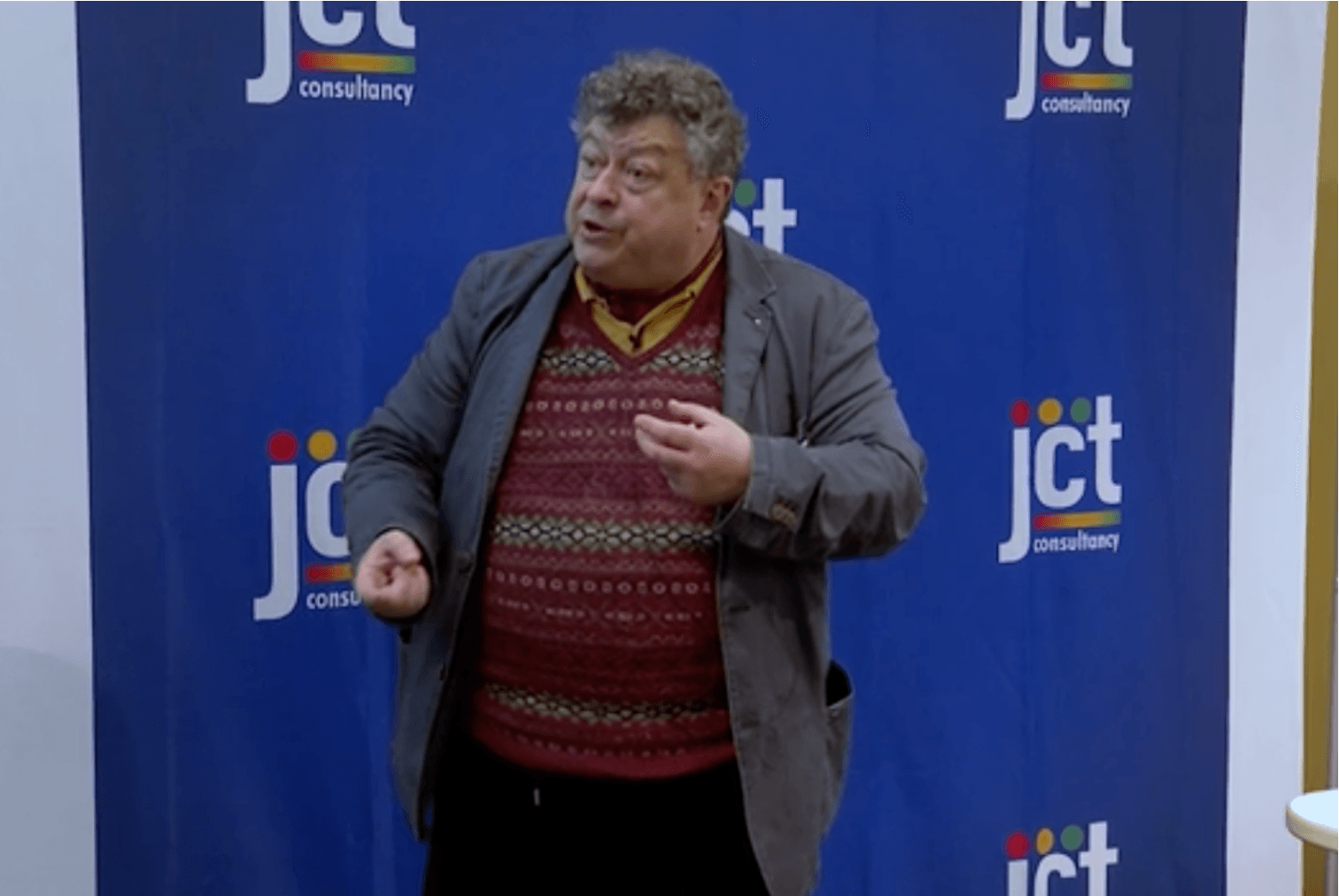
(Picture – JCT)