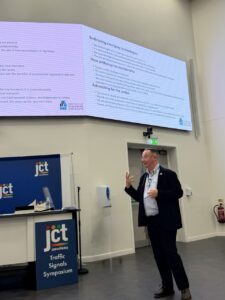
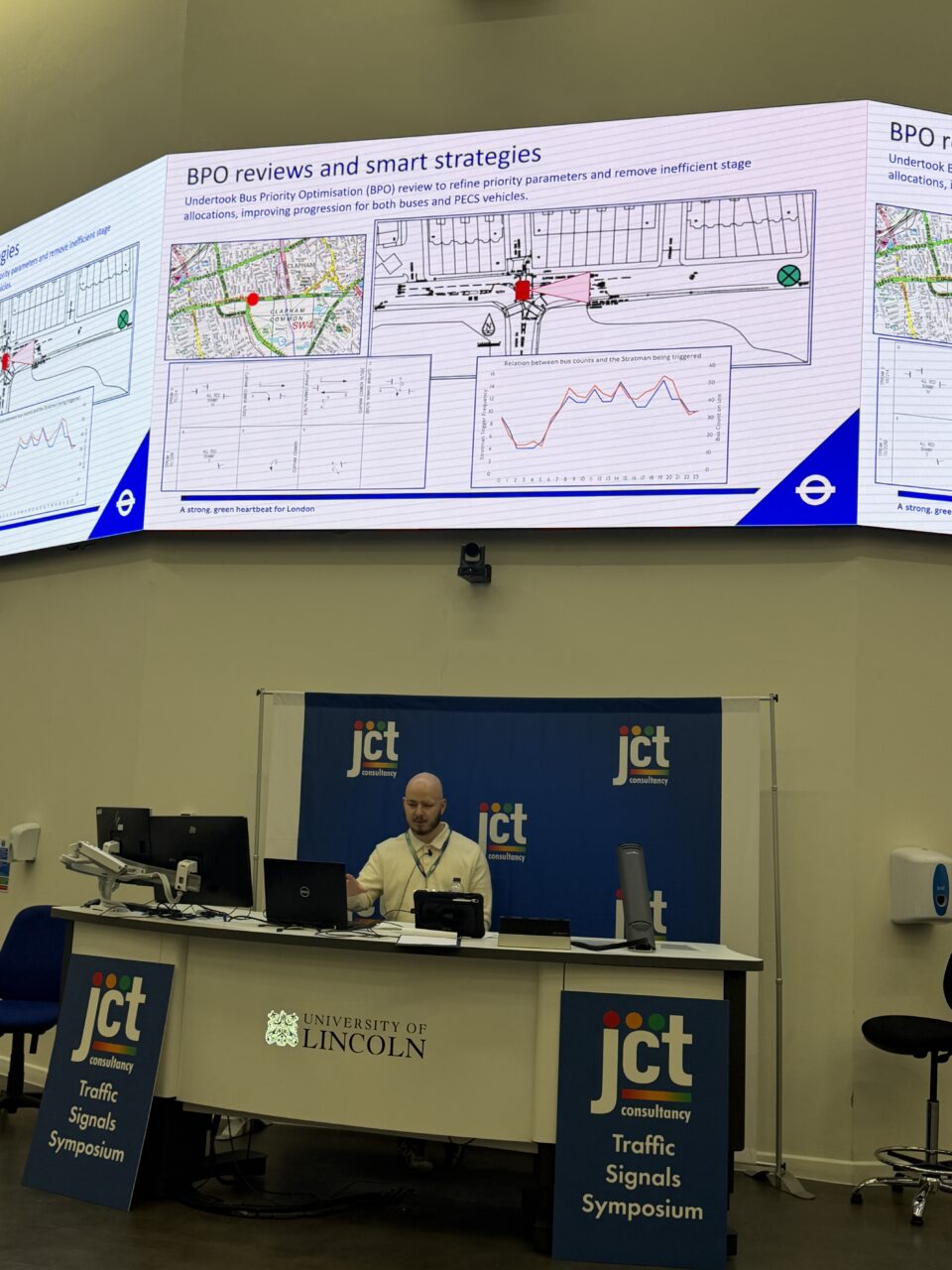
Councils could apply techniques developed to improve bus services to other transport operations, including freight routes, cycling corridors and pedestrian networks, according to a paper presented at the JCT Traffic Signals Symposium.
Transport for London Network Manager Joe Carr described how TfL adapted its Route Analysis Recommendation Report methodology to improve the reliability of prisoner transport journeys between prisons and courts.
The RARR process was originally developed as a “total route analysis” for bus services. It combines performance and system data with route walks, site observations and information from operators to identify faults, enforcement problems and opportunities to improve infrastructure or signal operation.

The approach was applied to routes between HMP Belmarsh and the Central Criminal Court, commonly known as the Old Bailey, and between HMP Wandsworth and Southwark Crown Court.
Average journey times on the first route fell from approximately 70 to 66 minutes, a reduction of around 6%. On the second, they fell from approximately 56 to 50 minutes, or approximately 11%.
TfL said the work also produced more consistent journey times, which was particularly important because prison departures and court opening times offered little operational flexibility.
Interventions included reviewing signal timing plans, repairing detection equipment, addressing communications faults affecting bus priority systems and installing pedestrian kerbside detection to reduce unnecessary red time when a person no longer needs to cross.
The first route included reviews and changes at 12 junctions and pedestrian crossings, alongside the commissioning of kerbside detection at five crossings. Eleven signal timing plans were updated on the second route and detection was commissioned at two junctions.
Mr Carr told the Symposium that the cumulative effect of relatively small changes could materially improve an entire route. The paper said: “Many worthwhile improvements require little or no capital investment.”
A further trial allowed smaller three and six-cell prisoner escort vehicles to use TfL-operated bus lanes on the Belmarsh route. Larger 10 and 12-cell vehicles had already been permitted to use the lanes because their seating capacity allowed them to be treated as buses.
Around a quarter of the route was covered by TfL-operated bus lanes. After four weeks, the trial had reduced average prisoner escort journey times by a further four minutes, with TfL reporting no measurable effect on bus performance. The route typically carried between one and five prisoner escort vehicles a day.
TfL considered using its iBus system to provide direct signal priority to the vehicles, but the existing equipment was approaching the end of its life and was integrated with bus ticketing systems. Mr Carr said the idea could be reconsidered as TfL moves to its replacement iBus2 platform, potentially using GPS information already collected from prison vehicles.
The paper suggested authorities could think more widely about where a route-review methodology might be useful instead of limiting techniques and data to the services for which they were initially developed.
Potential applications include park-and-ride services, university bus networks, freight routes serving logistics hubs, cycling corridors, pedestrian areas and strategically important traffic corridors.
A park-and-ride review, for example, could consider whether operating hours reflect evening and leisure demand as well as commuter peaks. A university could examine whether more reliable buses would allow student accommodation to be provided farther from its campus, while freight corridors could be reviewed for recurring delays and operational inefficiencies.
The methodology does not depend solely on extensive datasets. Where information is incomplete, the paper recommended combining available figures with stakeholder knowledge and direct observation.
It proposed that councils select routes with high demand, strategic importance or known reliability problems before reviewing journey times, signals, enforcement, infrastructure and operating practices across the complete corridor.
Mr Carr said the principles behind the process were “very transferable”, particularly to other controlled transport operations. The paper concluded that structured route reviews offered authorities a practical and scalable way to find improvements which could be missed when individual junctions or problems were considered in isolation.
(Picture – JCT)