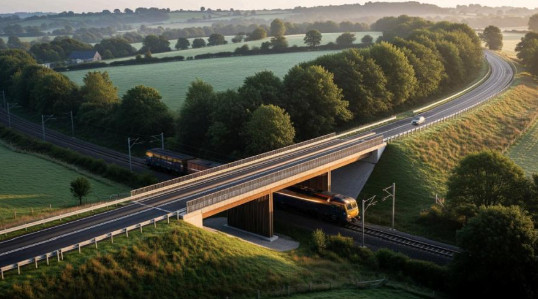
Fears about the Hereford Bypass were raised at a Herefordshire Council meeting las week, with campaigners arguing the road will not solve congestion while council leaders insist it is critical for the county’s future growth.
A question submitted by Amanda Martin of the Hereford Transport Alliance challenged the authority’s long-held claim that the bypass will reduce traffic congestion in Hereford, says the Hereford Times.
In response, Councillor Philip Price, cabinet member for transport and infrastructure, defended the scheme, arguing it is needed to support thousands of new homes and jobs planned for the county.
The exchange highlights the two sharply opposing views that have come to define one of Herefordshire’s most contentious infrastructure projects.
In her question, Mrs Martin argued that building new roads around urban areas does not provide a lasting solution to congestion because of the phenomenon known as “induced demand”, where additional road capacity can generate more traffic.
“Where the local network is at or near capacity, it is impossible to reduce urban congestion with peri-urban road building due to the phenomenon of induced demand,” said Mrs Martin.
Mrs Martin added that this was not simply a matter of opinion but an established principle of transport planning and economics recognised by the Department for Transport. She also said that traffic levels in Hereford would return to pre-bypass levels within around five years of a bypass opening.
Arguing that urgent action is needed to tackle congestion, traffic blight and declining city centre footfall, she asked when the council would instead bring forward a “Dutch-style traffic reduction strategy” aimed at encouraging more people to walk, cycle or use public transport for the estimated 88,000 daily journeys that both begin and end within Hereford.
Councillor Price rejected the suggestion that such an approach could deliver the infrastructure required to support the county’s planned growth:
“A Dutch style traffic reduction strategy is unlikely to deliver the infrastructure needed to help build 27,000 new homes in a planned and sustainable way as well as being able to open up employment land that will create thousands of new jobs.
“Our aim, when fully realised, will.”
The council has consistently argued that the bypass is a vital component of Herefordshire’s wider transport strategy and future development plans.
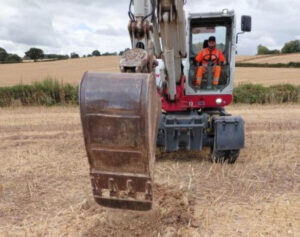
Preparatory works are already under way on Phase One of the project, including site preparation, fencing, ground investigations and drainage surveys.
(Picture: Herefordshire Council)