
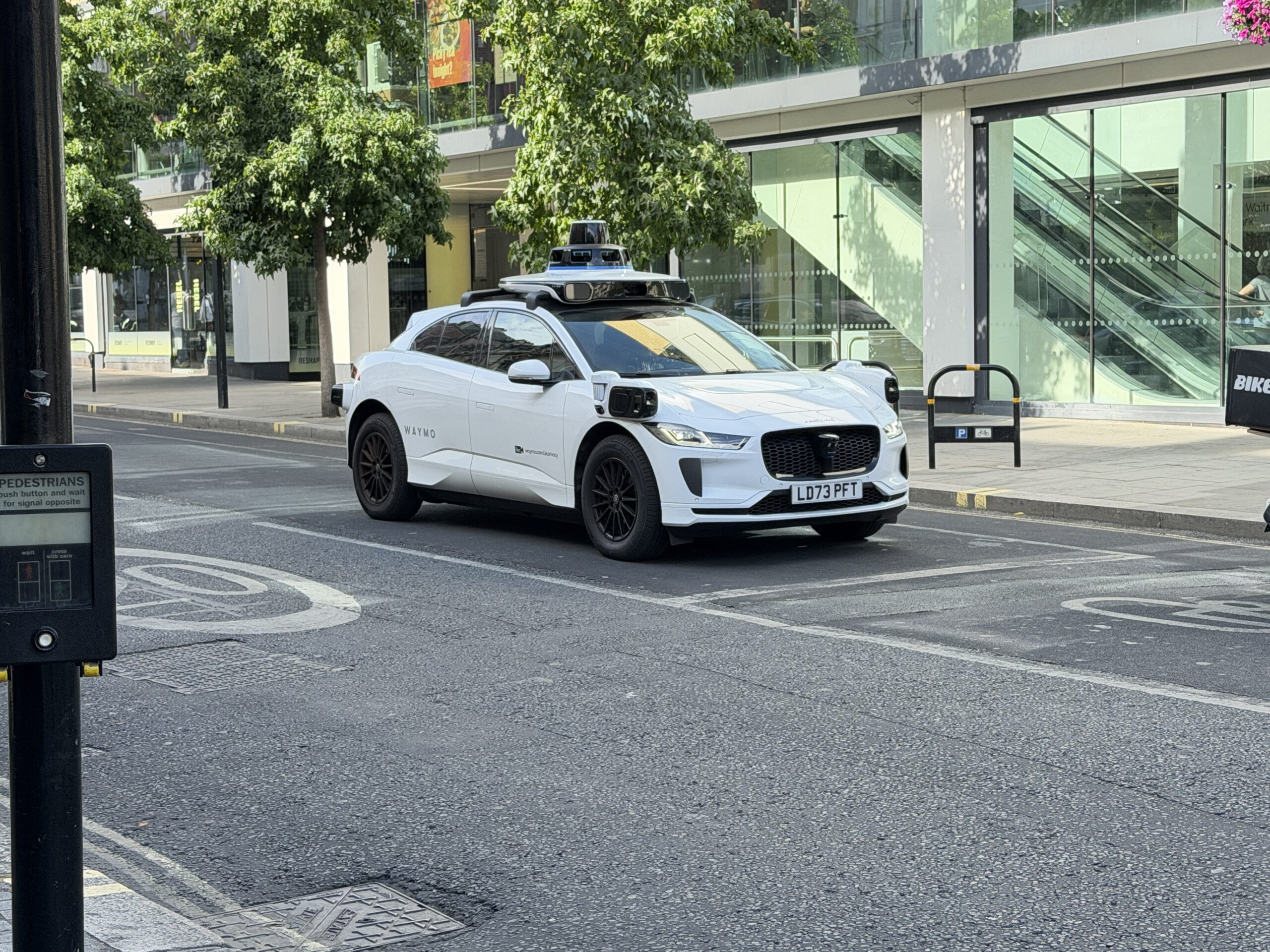
Autonomous vehicles have the possibility to save the UK – that’s the opinion of columnist James Price in a new article posted on CapX, the Centre for Policy Studies’ editorial arm.
“Last week, Transport for London granted licences to Uber and the British AI firm Wayve to carry paying passengers in robotaxis. More than 100,000 Londoners joined the waiting list in eight weeks,” he said.
“In February, I wrote in these pages that London hosting Wayve’s tests proved that the relevant regulatory regime, so often a CapX villain, was quietly becoming one of Britain’s genuine competitive advantages. At the risk of tempting fate, I thought the critics would be wrong. Six months on, I get to be smug. A British company, founded at a British university, will carry passengers through the capital before Google’s cars arrive.”
He continued:
“Ok, so those cars will have to carry a safety supervisor, hands hovering above the wheel, ready to intervene. Whereas, across the Atlantic, ‘driverless’ really does mean driverless. Waymo, Google’s sister company, runs fully autonomous cars across a dozen American cities, providing roughly half a million paid rides every week and aiming for a million by the end of the year.
“The company says its cars have achieved a 94% reduction in serious injury crashes across 220 million autonomous miles. There is still, clearly, some way to go before we can start to reap the benefits of this incredible new technology in Britain.”
A supervised phase is more defensible, he suggests, when introducing robots to a Roman city than an American gridded metropolis, even if it’s still “pretty weak.”
“But we are behind where we could be. The Automated Vehicles Act 2024, passed under Rishi Sunak, was meant to be operational from 2026. Under Labour, full implementation slipped to late 2027.
“Regardless, unlike in the late 19th century, there is no European competitor that comes close to the British success story that is Wayve. Other than our cousins across the pond, the only rivals to us are companies that are (literally) vehicles of the Chinese Communist Party. There are perfectly good national security grounds to ban these vehicles from ever being allowed to operate autonomously on Western streets.”
“That leaves our own regulatory regime as the only barrier to Britain seizing a leading role in a potentially enormous new industry,” he adds. “Well, that and the political will to push this through against the squawking of trade unions.”
James’ full article can be read HERE.
(Picture: Olga Gonzalez)