The number of drivers reporting suspected vehicle cloning has reached a record high, with more than 11,400 motorists contacting the DVLA after receiving fines or penalties they say have nothing to do with them.
Analysis of Freedom of Information data by the RAC shows that 11,402 drivers contacted the Driver and Vehicle Licensing Agency (DVLA) in 2025 after receiving penalties relating to vehicles they did not recognise or offences for which they said they were not responsible.
The figure represents a 9% increase on the 10,460 cases recorded in 2024 and is 93% higher than the 5,912 reported in 2018.

Vehicle cloning involves criminals copying a legitimate registration number onto another vehicle, usually of a similar make, model and colour, to avoid detection by enforcement cameras. The innocent vehicle’s registered keeper can then be left having to challenge fines and prove that their vehicle was not involved.
The RAC says the figures underline the need for stronger controls over the production and supply of number plates, alongside action to tackle the growing use of so-called ‘ghost’ plates designed to evade automatic number plate recognition (ANPR) cameras.
The UK’s network of around 18,000 ANPR cameras captures approximately 90 million vehicle reads every day, supporting enforcement across a wide range of roads and transport schemes.
The technology is used to identify vehicles involved in speeding and red-light offences, as well as to enforce clean air zones, congestion charging, bus lanes, private parking restrictions and the prohibition on driving beneath a red X signal on smart motorways.
However, the RAC warns that ghost plates, which can be partially or completely unreadable to enforcement cameras, make it harder to identify offenders and establish the true scale of number plate fraud.
A report by the All-Party Parliamentary Group for Transport Safety, supported by the RAC, found that as many as one in 15 vehicles could be displaying modified or non-compliant number plates. These include ghost and stealth plates intended to defeat ANPR systems.
Unlike conventional cloning, where an innocent vehicle’s registration is copied, ghost plates are designed to prevent a vehicle’s registration from being read reliably in the first place.
Both practices can undermine enforcement, allowing offenders to evade prosecution and potentially leaving fines and road-user charges unpaid.
Calls to tighten number plate regulations
The RAC is backing calls to overhaul what it describes as an outdated and poorly regulated number plate system.
Under the existing arrangements, motorists buying replacement plates are expected to provide the supplier with their V5C vehicle logbook and proof of identity and address. These checks are intended to establish that the customer is entitled to obtain plates displaying the registration.
However, the RAC says some suppliers fail to carry out the necessary checks, while illegal operations produce plates without verifying the customer’s entitlement.
The organisation argues that tougher standards for plate suppliers and greater scrutiny of the materials used to manufacture plates could help address both cloning and the use of plates that cameras cannot read.
RAC warns innocent motorists are being caught out
RAC head of policy Simon Williams said the continued increase in suspected cloning was alarming, describing the problem as a major challenge for motorists.
He said drivers often only discover their registration has been copied when a penalty notice arrives at their home, leaving them to contest evidence apparently linking their vehicle to an offence.
Williams said stricter checks by number plate suppliers would make it harder for criminals to obtain cloned registrations. He also warned that offenders often deliberately choose vehicles resembling the legitimate vehicle to reduce the likelihood of attracting attention.
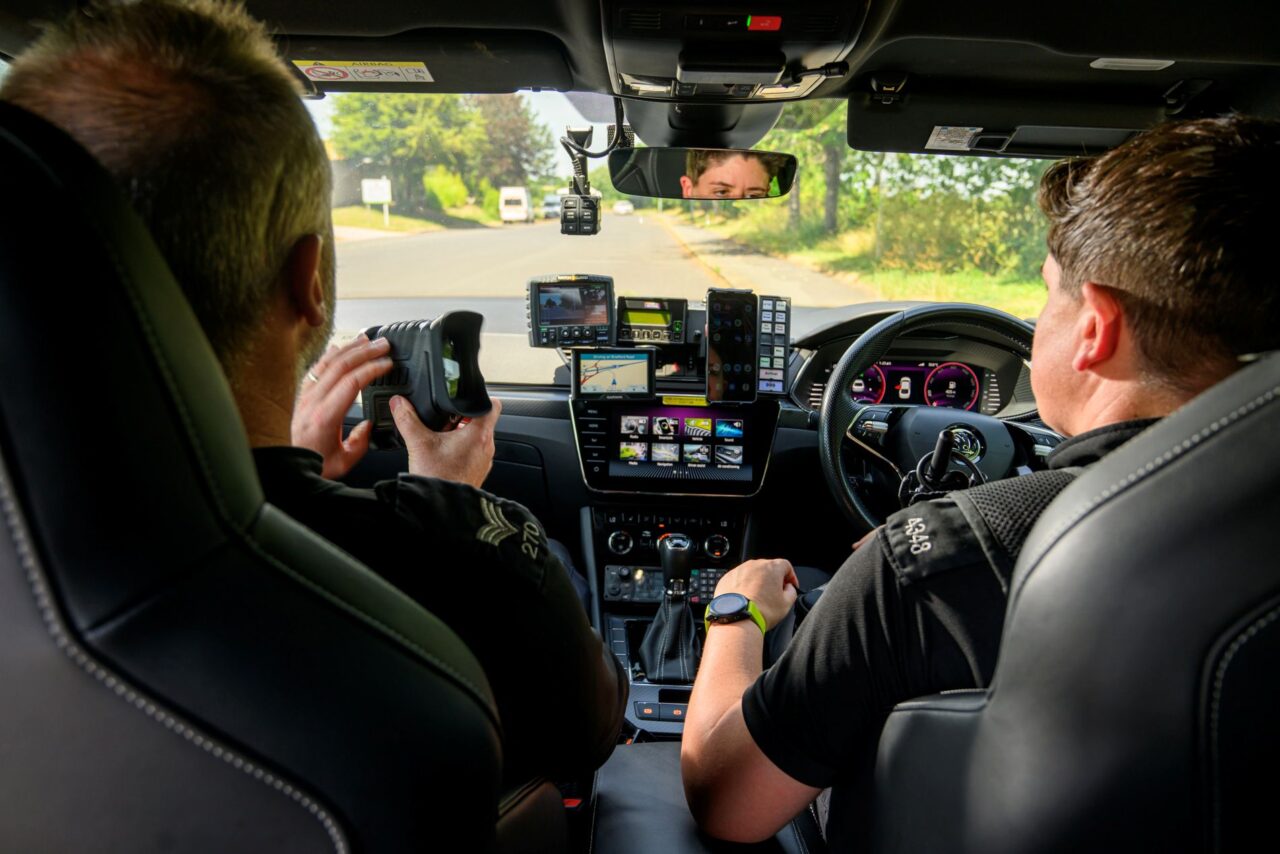
The RAC is also calling for stronger action against ghost plates, including wider availability of handheld devices capable of identifying unreadable registrations, upgrades to ANPR cameras and higher security standards for number plates and their manufacture.
Williams highlighted the need to ensure that the plastics used in raised, three-dimensional plates are suitable for camera recognition, warning that some motorists may have bought non-compliant plates without realising they could not be read by enforcement systems.
He said the Government appeared to be considering tougher penalties for offences involving illegal number plates, but argued that more should be done to prevent vehicle cloning and protect innocent motorists.
With ANPR technology playing a central role in enforcing road traffic law and a growing range of charging schemes, the RAC believes improving the integrity of vehicle registration plates is essential to ensuring offenders cannot exploit weaknesses in the system.
(Picture: DfT)