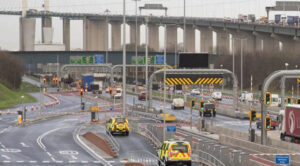

The Highways (Financing) Bill returned to Parliament for its second reading yesterday (15 October), as construction progresses on the Lower Thames Crossing, the first confirmed project expected to use the proposed funding model.
The legislation is intended to establish a framework for bringing private investment into major road schemes, enabling projects to proceed without relying on public finance. The Lower Thames Crossing is expected to be the first beneficiary, with work now under way on both sides of the River Thames.
The project will link Kent and Essex through twin tunnels beneath the Thames, providing an alternative route to the Dartford Crossing. It is designed to ease congestion, improve journey times and connectivity for motorists and freight operators, and support economic growth.

Preparations for the crossing have also advanced with an order placed for Europe’s largest tunnelling machine to support the construction programme.
The proposed financing arrangements would include safeguards on tolls, with the Office of Rail and Road responsible for setting caps intended to ensure charges remain balanced and transparent.
Roads Minister Justin Madders said:
“For too long, drivers have been stuck in traffic while vital road upgrades have been delayed.
“By bringing in private investment, hardworking taxpayers won’t be left footing the bill through higher taxes, while major schemes like the Lower Thames Crossing can finally move forward. That means less congestion, quicker journeys and a boost for jobs and growth across the country.”
Lower Thames Crossing chief executive Matt Palmer said the parliamentary milestone came as delivery work gathered pace.
“With construction underway and Europe’s largest tunnelling machine on order, we’re making real progress in building the Lower Thames Crossing.
“The Bill reaching its Second Reading is another welcome sign of momentum on this is a vital project that will unlock economic growth and make everyday journeys easier for millions of people by tackling the chronic congestion at Dartford.”
The road haulage and coach sectors have also highlighted the importance of understanding how the new funding arrangements will work in practice.
Declan Pang, director of policy and public affairs at the Road Haulage Association (RHA), said:
“We are pleased to see the Government taking action to deliver the Lower Thames Crossing. Reliable and resilient road infrastructure is essential for the road haulage and coach industry, supporting the efficient movement of goods and passengers across the country.
“We will be interested in how the proposals develop and how the new framework operates in practice. Any new approach to financing major road projects must carefully consider the implications for freight operators, alongside the benefits of improved capacity and reduced congestion.”
(Picture: National Highways)