Lincolnshire’s Principal Engineer for Traffic Signals has highlighted how he’s changed the County Council’s approach to traffic signal renewals after a ten-year assessment indicated that continuing with its established refurbishment model would leave the authority managing an increasingly old and unreliable asset base.
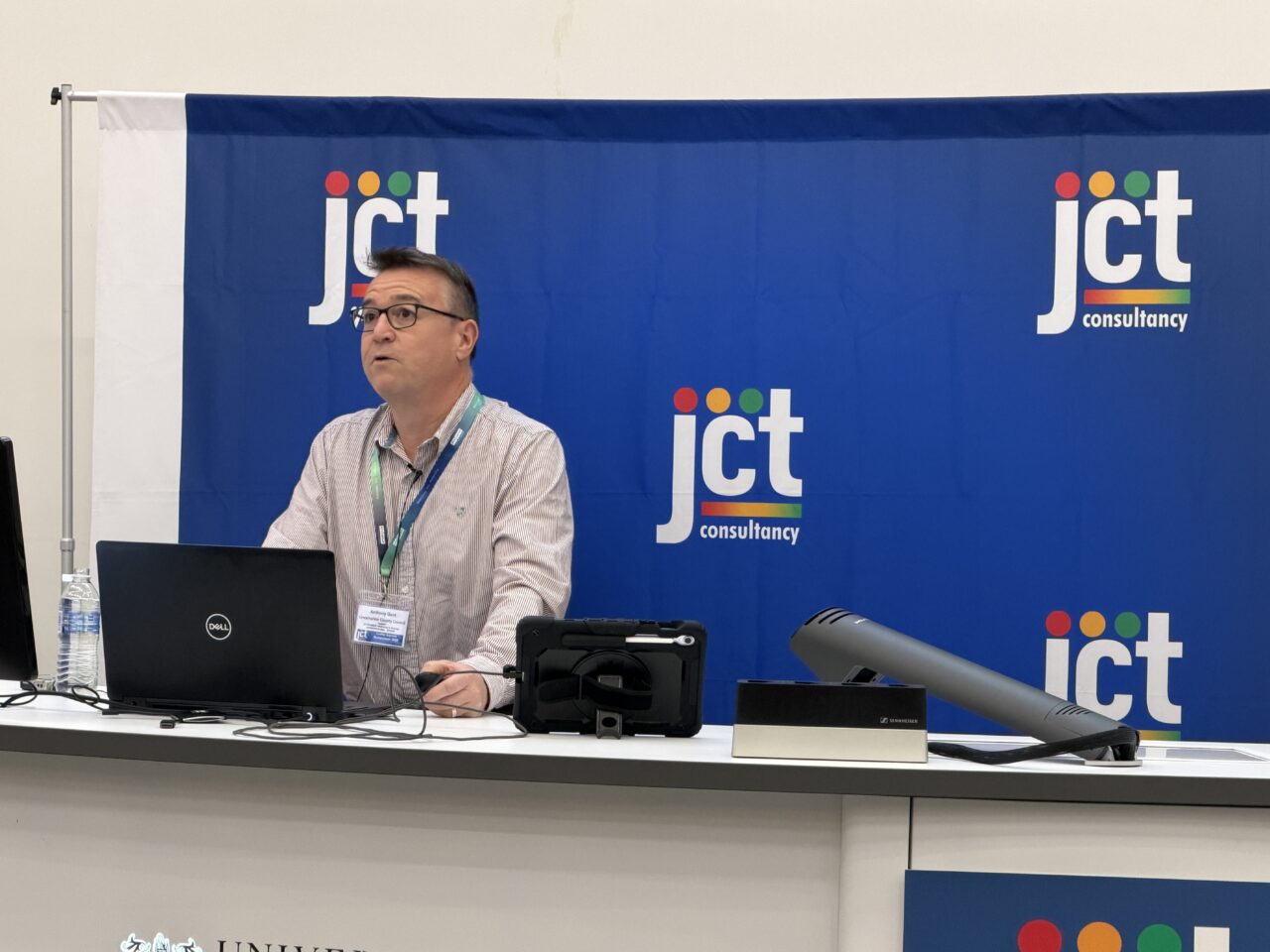
Speaking at the JCT Traffic Signals Symposium in Lincoln, Anthony Gent said Lincolnshire maintains 333 installations across England’s second-largest county, and although the authority has made progress in areas such as LED retrofits, it also has dozens of sites operating beyond their anticipated life while continuing to add new installations.
Mr Gent said the council had previously planned around a 25-year replacement cycle, although manufacturers typically suggest a 15-year life and engineers often regard 20 years as a reasonable target. Keeping equipment in service longer may reduce immediate capital spending, he explained, but can increase maintenance costs and operational risks.
He cited one site with an obsolete Siemens controller which reportedly failed approximately 14 times during its final 18 months. Spare parts and engineers with the knowledge required to maintain older equipment are also becoming harder to find. At another location, six poles had to be replaced after the maintenance contractor declared them unfit because of corrosion.
A ten-year asset management exercise showed that, without a change of approach, the average age of some assets could reach approximately 28 years by 2035–36.
He also pointed to other pressures, including material cost inflation, difficulties securing access to the highway and requests to co-ordinate renewals with other highway schemes. While combining work with bridge or carriageway projects can reduce disruption, Mr Gent said it can also result in signals being replaced too early or retained for too long.
Political requests for new crossings have created an additional challenge because they increase the number of assets that must subsequently be maintained. Mr Gent said a closer relationship with Lincolnshire’s highways portfolio holder had made a significant difference.
The councillor’s engineering background had helped to establish a more evidence-led discussion, he said. Requests for crossings are now tested against council policy, collision history and other data, rather than being approved principally in response to local political pressure.
Mr Gent suggested this relationship demonstrated the value of involving portfolio holders closely in asset planning and explaining the long-term maintenance consequences of capital decisions.
Lincolnshire has also narrowed what it treats as part of a traffic signal renewal. Previous schemes could include tactile paving, footways, guardrail removal, road markings and carriageway resurfacing alongside signal equipment. These elements will now be referred to the relevant council teams, rather than routinely funded from the signals budget.
For suitable smaller sites, the authority is replacing obsolete controllers and signal equipment, upgrading items such as pole sockets and completing only limited civil engineering work. Mr Gent said these schemes cost around £25,000, compared with approximately £85,000 for the council’s former comprehensive approach, enabling three sites to be addressed for roughly the previous cost of one. They can also be completed in three or four days.
The lessons for other authorities, he suggested, include developing a long-term picture of asset age, separating essential signal work from wider public-realm improvements, identifying standardised “easy win” renewals and building closer relationships with procurement teams and elected members.
Lincolnshire is continuing to work towards an average asset life of around 20 years. Its revised plan currently indicates approximately 22 years, meaning further investment will still be required, but Mr Gent said the authority is moving towards a steady state instead of managing continued decline.
(Picture – JCT)