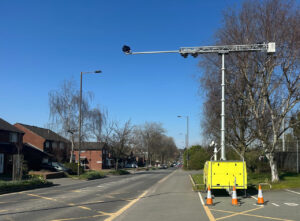
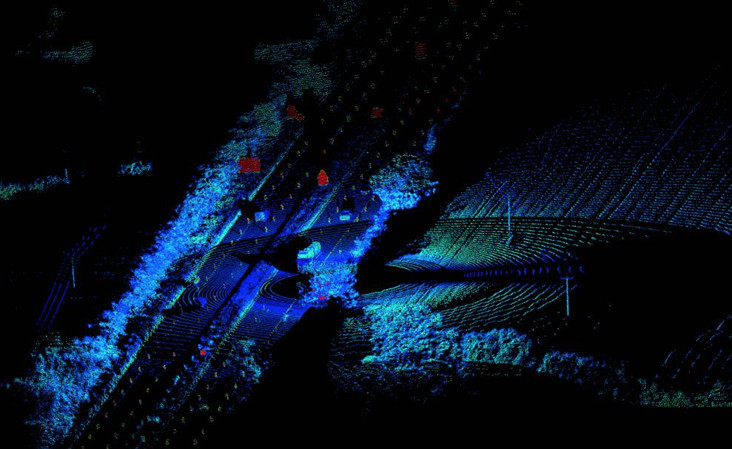
After two years of design, development, and testing, followed by an 11-month real-world trial, Roadside Technologies has announced the release of its advanced hazardous object detection system, VECTA.
The trial saw four VECTA towers deployed along approximately 1km of a live UK motorway in parallel with a remote CCTV monitoring service, so automated detection could be compared with operator-led monitoring on genuine events rather than simulated scenarios. This approach allowed Roadside Technologies to assess not only system performance, but also how intelligent monitoring can complement existing operational processes and improve situational awareness.
The trial proved that VECTA detects, classifies, and alerts on roadworks hazards within the same second. Against 98% of comparative incidents, VECTA detected and raised automated alerts 98% faster than standard monitoring services. Validated against a sample of CCTV recordings of 1,500 vehicles, VECTA’s vehicle classification and counting accuracy remained high in low light, rain and poor weather – scoring 100% daytime vehicle classification accuracy, 98% night-time vehicle classification accuracy, and 97% vehicle counting accuracy.
Throughout the trial, the roadworks monitoring database generated by VECTA collected over 473 million “messages” between the four towers – points of data that included 166,000 vehicle detections, approximately 864,047 MQTT messages per tower, per day, and over 3.5 million unique object IDs within a single month. This database enabled extensive assessment of coverage performance, object classification, work-zone incursions, wrong-way driving events, queue formation, and automated alerting performance – all within a live roadworks environment.
Chris Moseley, Managing Director of Chesterfield-based Roadside Technologies, said,
“This trial gave us the opportunity to prove VECTA in a live motorway environment, against genuine operational events and challenging weather conditions. The results demonstrate how intelligent, automated detection can give operators earlier awareness of developing hazards while complementing the CCTV systems and operational processes they already rely on. It is an important milestone for VECTA and for our ambition to help make roadworks safer and better informed.”
A supplement to traditional CCTV rather than replacement, VECTA’s intelligent monitoring can move roadworks from reactive observation to proactive awareness, giving operators faster, better-informed decisions. Built into one platform, operators can access live CCTV feeds, manage and respond to alerts, export detailed reports, and access in-depth analytics.
Having started life through the National Highways Hazard Protection on Roads Accelerator, a programme delivered by Connected Places Catapult, the VECTA system uses LiDAR in combination with edge AI perception software and a fusion engine to maintain a continuously updated digital twin of the road, identifying hazards automatically. This innovative technology is the subject of a pending patent application.
(Picture: Roadside Technologies)