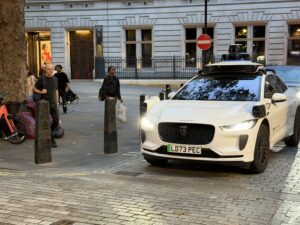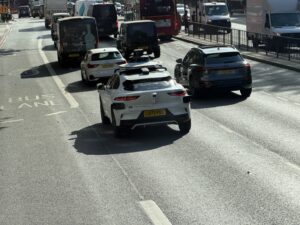
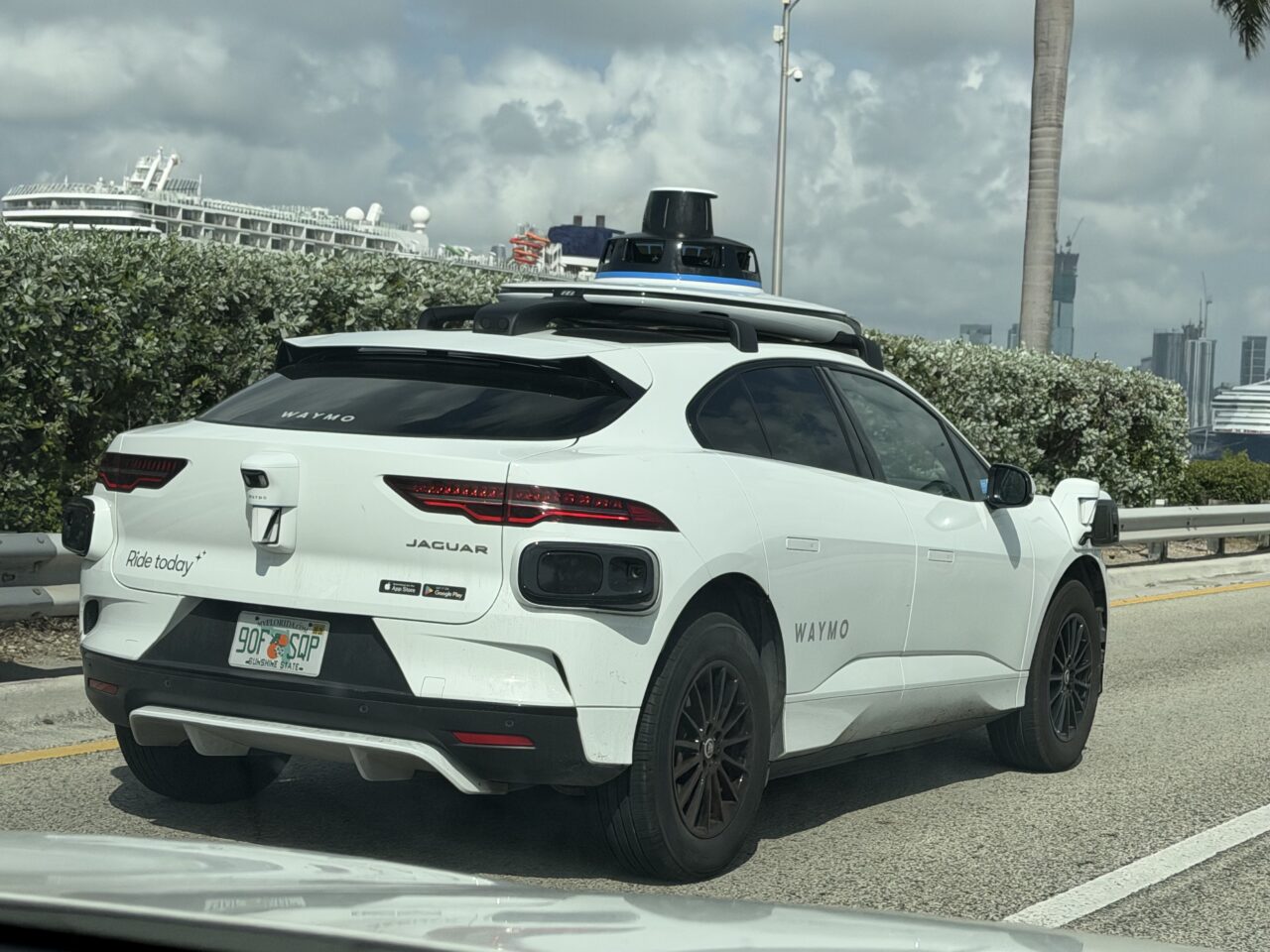
The Insurance Institute for Highway Safety has published the results of its study on Waymo’s driverless robotaxis. The conclusion is that the cars crash less often than people.
The researchers compared Waymo’s cars with human drivers in four cities: San Francisco, Phoenix, Los Angeles and Austin, says Warp News. Waymo’s cars traveled about 50 million driverless miles during the study period. Humans in the same cities drove about 222 billion miles.
Per mile traveled, Waymo’s cars were involved in 68 per cent fewer crashes. In Phoenix, the rate was 76 percent lower, in Los Angeles 71 per cent and in San Francisco 35 per cent. In Austin, where the sample size was small, the rate was 4 per cent higher. Waymo’s cars had 85 percent fewer single-vehicle crashes. Crashes where someone was injured were 81 percent fewer.

To get a fair comparison, the researchers went through crash reports from Waymo, Cruise, Zoox and other companies between 2021 and 2024. They removed duplicates and incidents where the automation was not engaged, where the vehicle was not on a public road or where no real crash took place. They then counted only crashes that an ordinary person would report to the police.
This was necessary because self-driving companies must report even minor scrapes. Humans, on the other hand, report about half of all crashes and two thirds of injury crashes.
According to Eric Teoh, who led the study, the results are encouraging signs for driverless vehicles.
Waymo has now given 20 million paid rides over more than 220 million miles. That equals 250 lifetimes of driving. In March, an independent study from Waymo showed 92 percent fewer crashes with deaths or serious injuries compared with human drivers in similar city environments. Pedestrian injuries were 92 percent fewer. Crashes where the airbag deployed were 83 percent fewer. At intersections, among the most dangerous places in traffic, injury crashes were 96 percent fewer.
Regular cars also become safer from the technology behind self-driving. Automatic emergency braking that recognizes people in front of the car cuts pedestrian crashes by 27 per cent. Automatic braking halves rear-end crashes and reduces injuries in such crashes by 56 percent. The system will be mandatory in all light vehicles in the U.S. by 2029. More than 90 per cent of new models already comply.
Cars with automatic emergency braking alone have 13 percent fewer property-damage insurance claims. Cars with several assistance features, such as adaptive cruise control and lane-departure warnings, have up to 39 per cent fewer claims.
(Picture: Olga Gonzalez)