
The reported removal of 24 road schemes from the government’s funding programme has raised questions about the future infrastructure pipeline for the highways sector and how long-term investment decisions will be made. Local authorities are reportedly being notified of the decisions by the Department for Transport (DfT).
While a full list has yet to be formally published by the department, the reported cancellations include several substantial projects intended to improve network capacity, tackle congestion and support housing and economic growth.
Among the largest schemes affected are the proposed M5 Junction 9 and A46 improvements in Gloucestershire, with a reported cost of £930 million, the £303 million Melksham bypass, the £197 million Chesterfield Staveley Regeneration Route and the £185.3 million Kendal Northern Access Route.

Other schemes reported to have been dropped include the A4174 MOD Roundabout improvements, the A454 between Wolverhampton and East Park Gateway, Blyth Relief Road, the Ely to Cambridge A10 improvement scheme, Sheffield Innovation Corridor Road and the A31 Farnham Corridor.
Essex County Council confirmed on 9 October that its A127 Corridor for Growth scheme would not proceed under the programme. North Northamptonshire Council has also reportedly been informed that its long-awaited A509 Isham bypass is no longer included.
In Surrey, the decision affects the £115 million A31 Farnham Corridor scheme, which was intended to address congestion at Hickley’s Corner, Coxbridge and Shepherd and Flock.
Crewe is also facing a further setback following the rejection of a lower-cost A500 corridor improvement proposal, developed after the loss of the original HS2-linked dualling scheme.
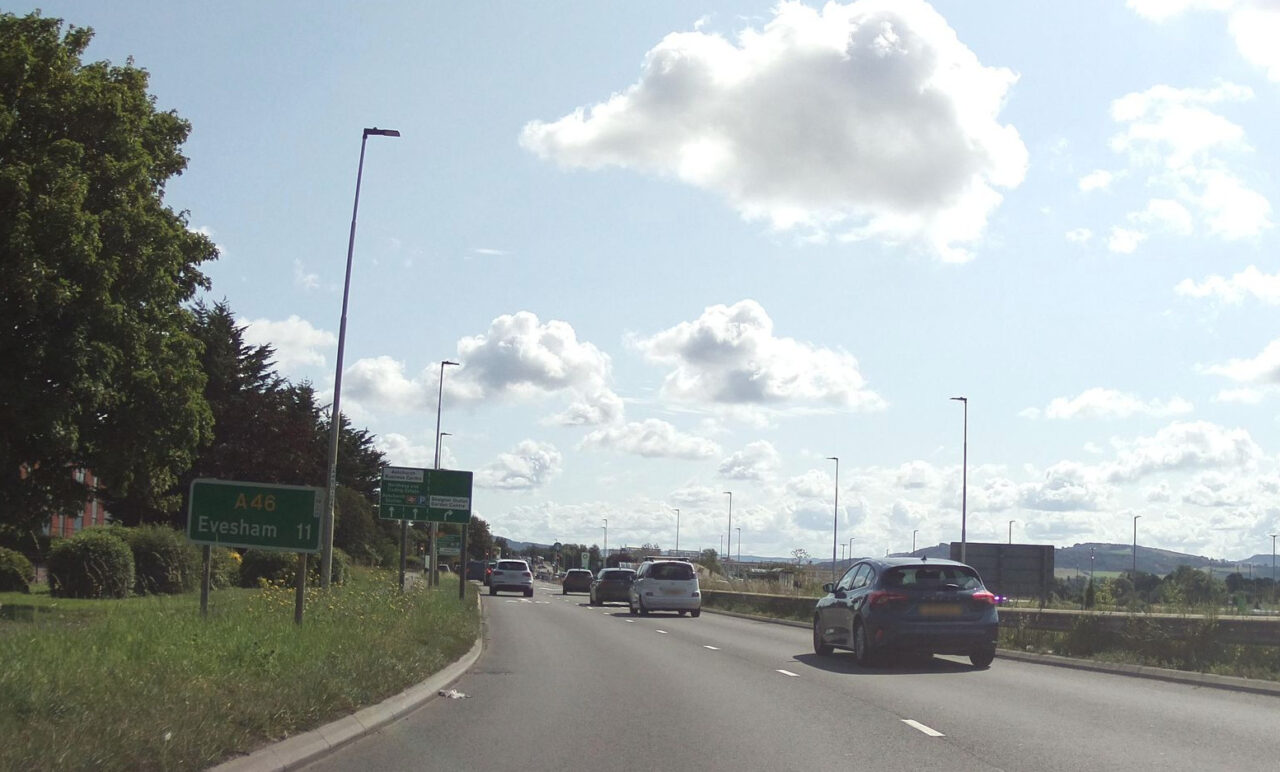
The proposed M5 Junction 9 and A46 improvements around Ashchurch represent one of the largest projects affected. Gloucestershire and Tewkesbury councils have warned that the decision could have implications for planned housing and employment growth in the area.
Elsewhere, Westmorland and Furness Council has sought discussions with DfT over the Kendal Northern Access Route, while North Northamptonshire Council is reviewing its options for the A509 Isham bypass. The possibility of schemes returning if suitable funding becomes available and sufficiently strong business cases can be demonstrated has also been raised.
What does this mean for the highways sector?
The reported decisions raise wider questions about the future of long-term infrastructure investment in England, particularly for local authorities, consultants and contractors planning their work around major highways programmes.
For the civil engineering sector, the implications extend beyond the individual projects. Major road schemes can represent years of development work, consultancy, design, environmental assessment and preparation before construction begins. Changes to funding commitments can therefore affect the forward pipeline well before any construction contracts are awarded.
The scale of some of the affected schemes also highlights the challenge of balancing competing demands on public finances against the need to maintain and improve the strategic and local road networks.
For local authorities, the decisions may mean revisiting transport strategies, growth plans and the business cases developed around proposed improvements. In some locations, alternative approaches may need to be considered, while others could seek to bring schemes forward again if funding opportunities emerge.
The longer-term question is how the government intends to provide certainty over highways investment, allowing local authorities and the supply chain to plan effectively while ensuring that public funding is directed towards projects offering the strongest economic, transport and wider social benefits.
With the full list of affected schemes and the detailed rationale for individual decisions still to be confirmed publicly, the implications for the sector will become clearer as further information emerges.
For now, the reported changes put the spotlight on the future shape of England’s road investment programme, and how a stable, deliverable pipeline of highways improvements can be maintained over the long term.
(Picture: Mapillary)